
OCT Physical Layer Test Platform
Optical Communications Terminal, OCT
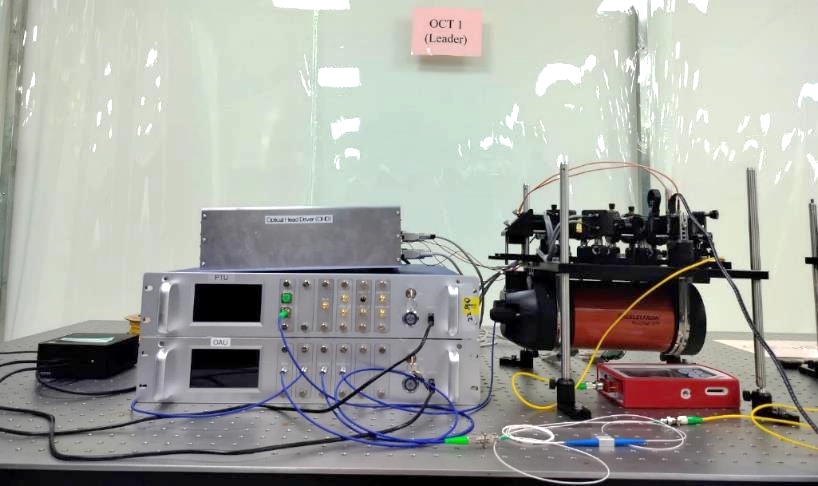
The Optical Communications Terminal (OCT) is designed for high-speed free-space optical communication between Low Earth Orbit (LEO) satellites. It integrates high-speed optical transmission and reception, optical amplification, and precision Pointing, Acquisition, and Tracking (PAT) technologies to establish and maintain bidirectional inter-satellite optical links.
Developed based on the SDA OCT standard, the OCT combines a modular optoelectronic architecture with system-level control capabilities, supporting high-speed data transmission, beam tracking, and optical link management for satellite communication system development and validation.
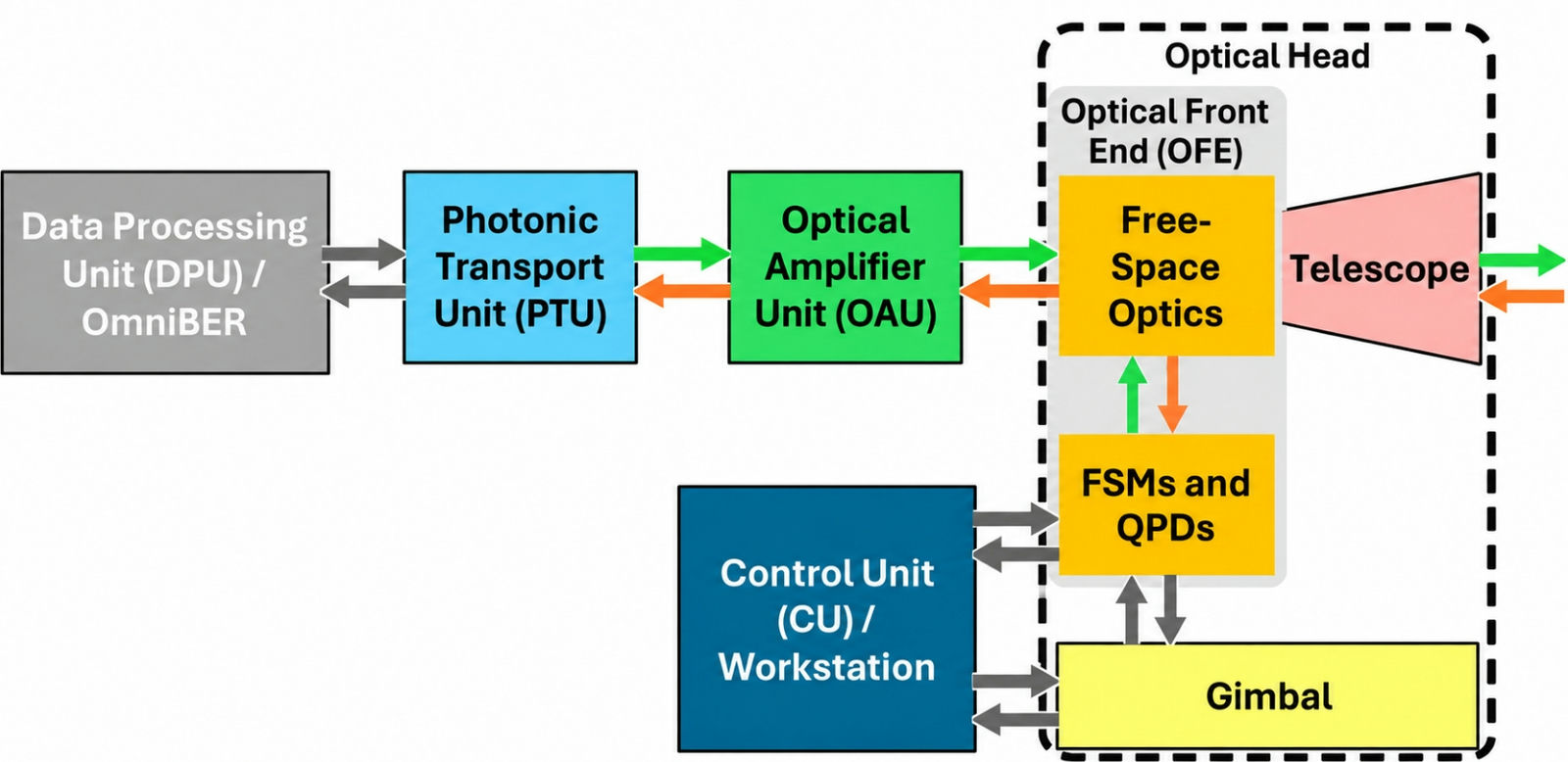
OCT Function Block
Key Features and Functions
The OCT integrates a Photonic Transceiver Unit (PTU), Optical Amplifier Unit (OAU), Optical Front End (OFE), telescope, and pointing and tracking control system to provide bidirectional free-space optical communication.
The system supports 2.5 Gbps OOK-NRZ data transmission, combining high-power optical amplification and low-noise reception for long-distance optical links. It incorporates AM tracking tones, beam scanning, and closed-loop tracking control for Pointing, Acquisition, and Tracking (PAT). Additional capabilities include optical power management, wavelength selection, and system status monitoring.
OCT Physical Layer Test Platform
(Pattern generator + BERT)
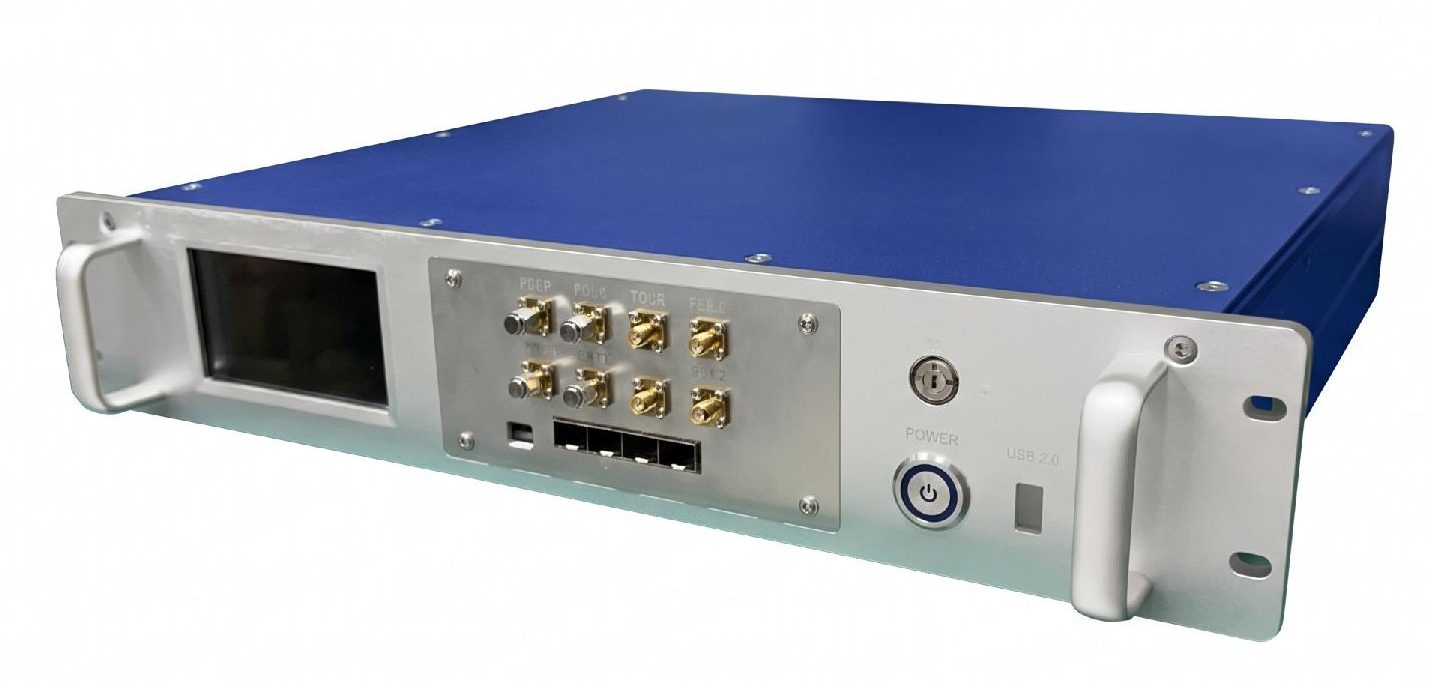
OCT Physical Layer Test Platform
The OCT Physical Layer Test Platform is designed for communication performance testing and verification of Optical Communications Terminals (OCTs). It integrates high-speed pattern generation, frame processing, and bit error rate measurement, supporting multiple data rates and payload formats for optical communication system development and validation.
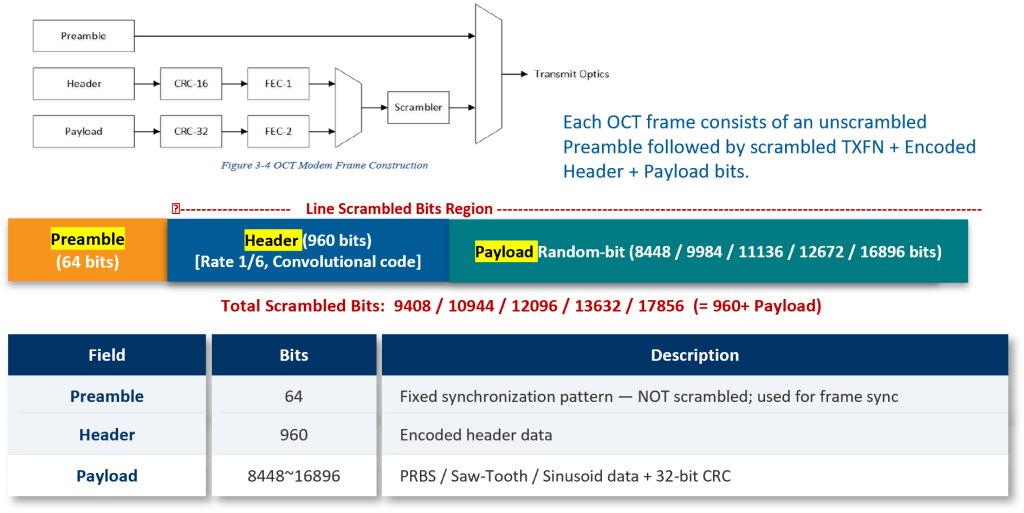
Key Features and Functions
The platform integrates a high-speed Pattern Generator and Bit Error Rate Tester (BERT), supporting data rates of 2.5, 3.125, 6.25, and 10.3125 Gb/s. It provides OCT frame generation and processing, including preamble synchronization, header and payload handling, scrambling, FEC encoding/decoding, and CRC validation. The platform also supports BER measurement, bit error counting, and frame error detection for physical-layer performance verification.