Space Qualification
Environmental Testing & Validation
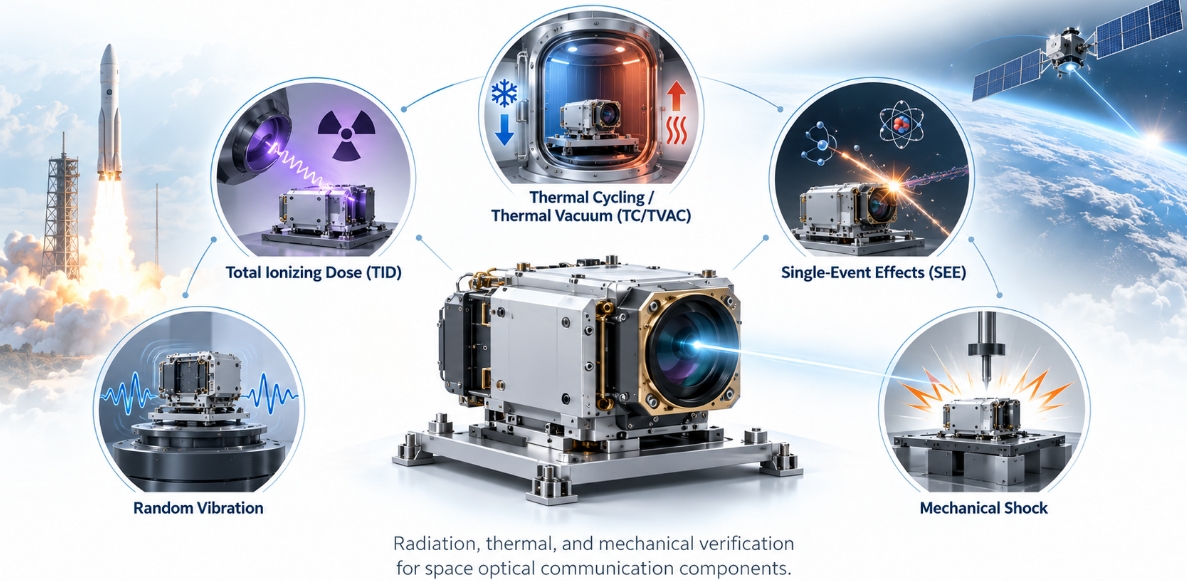
Space optical communication components must withstand harsh environmental conditions throughout launch and on-orbit operation, including radiation exposure, temperature variations, mechanical vibration, and shock.
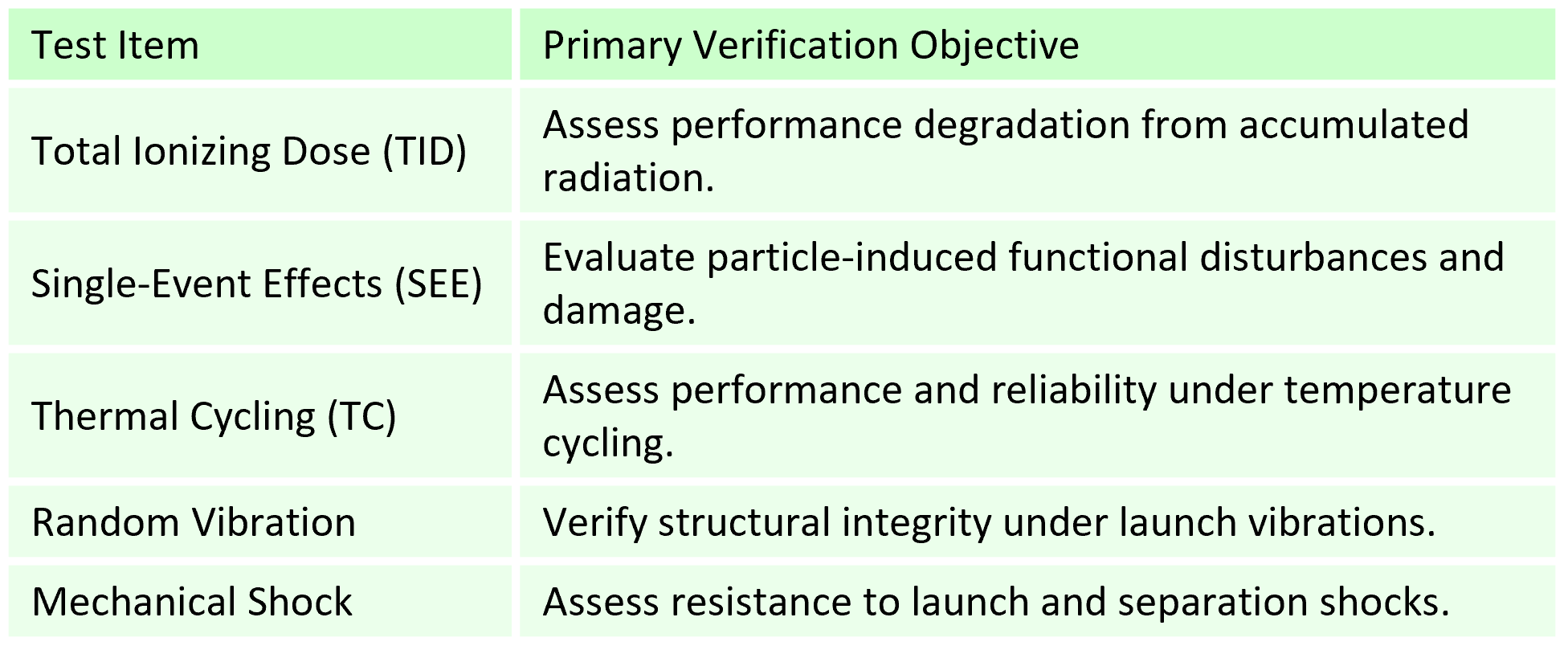
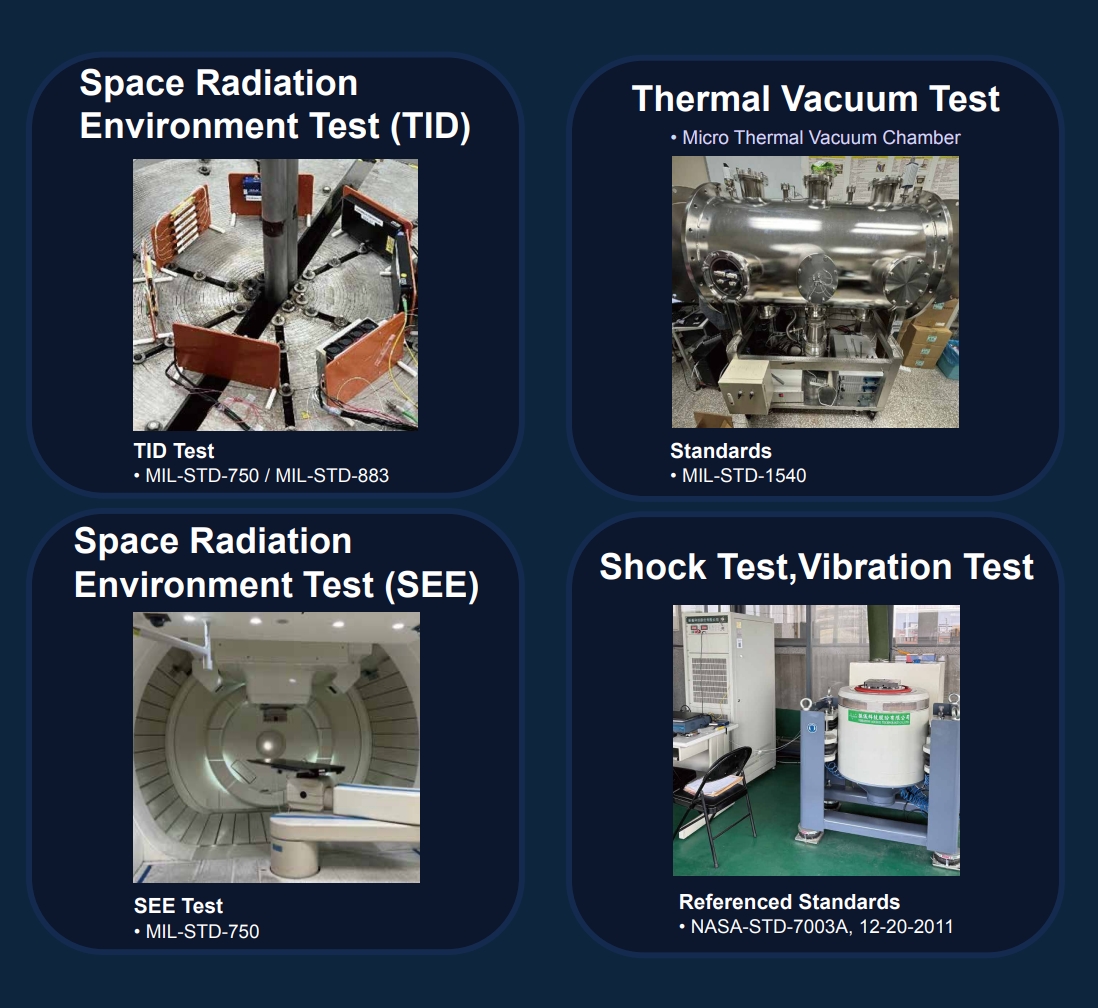
To evaluate product reliability and environmental robustness, OptiFab conducts environmental testing and performance verification covering Total Ionizing Dose (TID), Single-Event Effects (SEE), Thermal Cycling / Thermal Vacuum (TC/TVAC), Random Vibration, and Mechanical Shock. These evaluations help identify potential failure mechanisms, assess performance stability, and support the development of reliable optical components for space applications.
Testing Standards & References
Environmental testing and validation activities reference established aerospace and industry standards, including NASA GSFC-STD-7000 (GEVS), MIL-STD-883, and JEDEC JESD57/JESD234. These standards provide guidance for radiation testing, mechanical environmental testing, and reliability assessment. Test conditions and verification procedures are defined according to component characteristics and mission-specific requirements.
Total Ionizing Dose (TID)
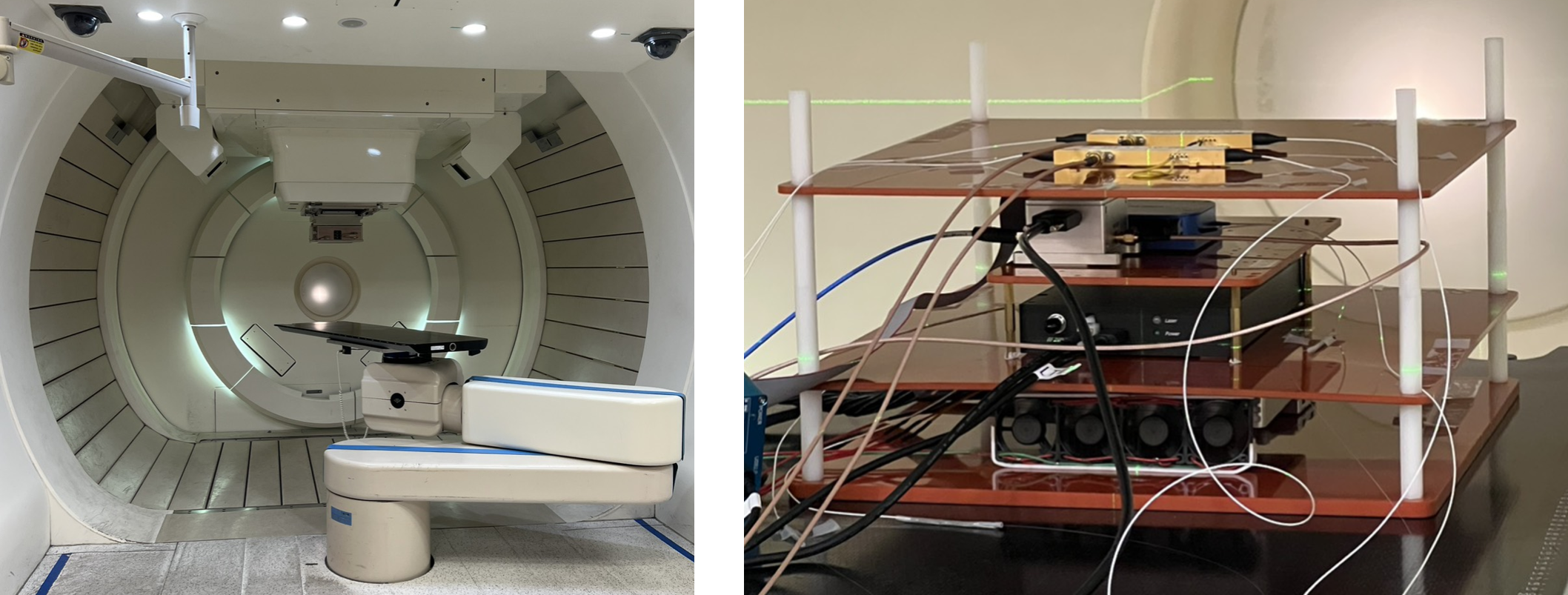
TID testing evaluates the effects of accumulated ionizing radiation on the performance and functionality of optical and electronic components. Using Co-60 gamma irradiation, radiation-induced degradation is assessed through pre-irradiation characterization, in-situ monitoring, and post-irradiation verification.
OptiFab’s testing experience includes irradiation up to 30 krad(Si) on optical modulators, laser sources, and optical amplifier modules.
Single-Event Effects (SEE)
Single-Event Effects (SEE) are radiation-induced phenomena caused by individual high-energy particles, such as protons and heavy ions, interacting with sensitive regions of electronic devices. Unlike Total Ionizing Dose (TID), which results from accumulated radiation exposure, SEE can occur from a single particle interaction and may lead to temporary functional disturbances or permanent device damage.
Common SEE mechanisms include Single-Event Upset (SEU), which causes changes in stored data or logic states; Single-Event Transient (SET), which produces temporary signal disturbances; Single-Event Functional Interrupt (SEFI), which disrupts device functionality; and Single-Event Latch-up (SEL), which may result in excessive current consumption and potential permanent damage.
SEE testing evaluates the susceptibility of electronic components and optical modules to these radiation-induced effects through controlled particle irradiation. By monitoring optical performance, electrical parameters, communication interfaces, and operational status during irradiation, the testing helps identify potential failure mechanisms and assess functional reliability for space applications.
Thermal Cycling / Thermal Vacuum (TC/TVAC)
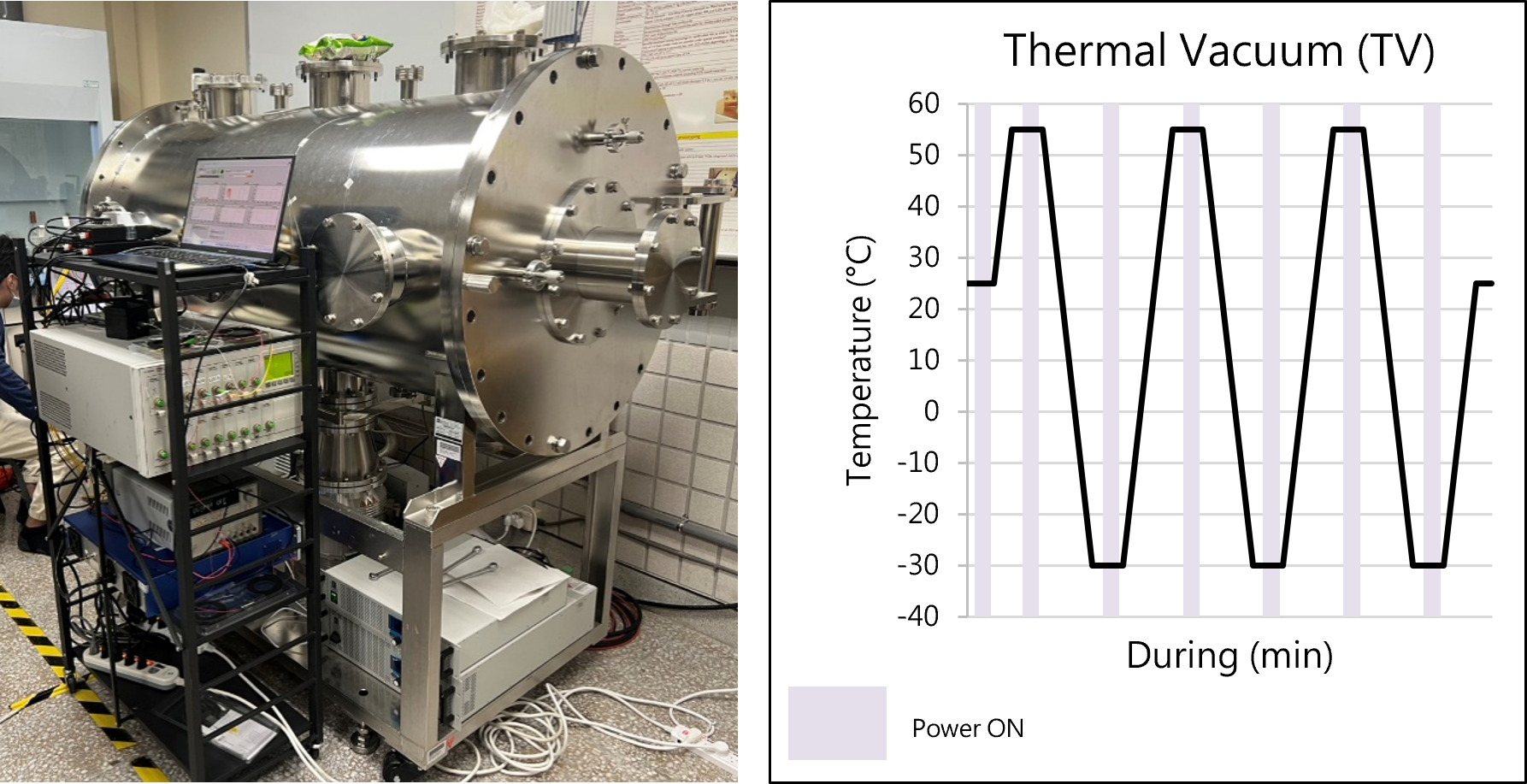
Thermal testing evaluates component performance and reliability under temperature variations and simulated space thermal environments.
Functional and optical performance measurements are conducted to identify temperature-dependent degradation, structural instability, and potential failures associated with thermal stress.
Random Vibration & Mechanical Shock Testing
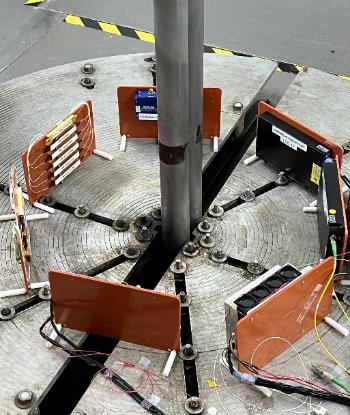
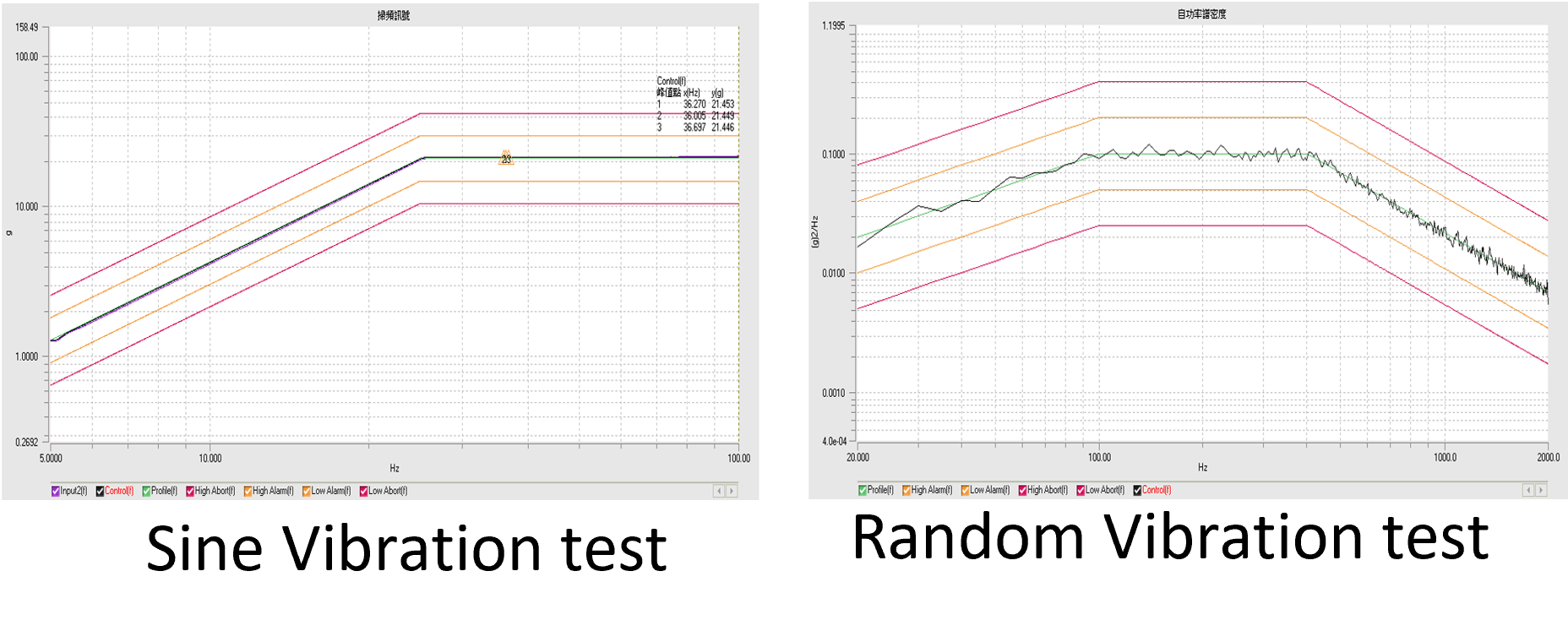
Random Vibration and Mechanical Shock testing evaluate the structural integrity and functional stability of optical components under launch-related mechanical loads. Testing includes pre- and post-test inspections, mechanical response measurements, and functional verification to assess potential structural damage or performance degradation.
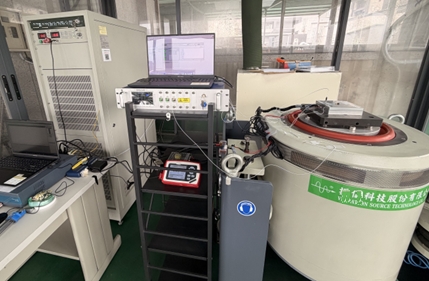
The test approach begins with NASA Minimum Workmanship requirements as a baseline, followed by mission-specific requirements and mechanical environment flow-down to establish appropriate test conditions. Random vibration and mechanical shock tests are then performed, with pre- and post-test inspections and functional verification to assess structural integrity and performance stability.

Space Qualifications
The Qualified Item List