
NantNova’s optical receiver subsystem converting incoming photons to electrical signals with high sensitivity for deep-space and inter-satellite links.
An optical link is only as good as its receiver. After a laser beam travels thousands of kilometers through space, the signal arriving at the far end is extraordinarily faint — sometimes just a handful of photons per bit. The Optical Front End is the subsystem that captures that light and converts it into usable electrical data with the sensitivity to close the link.
NantNova’s OFE uses avalanche photodiodes (APDs) that internally multiply each incoming photon into a cascade of electrons, dramatically boosting signal strength before noise can corrupt it. Combined with precision optical components that separate, steer, and focus the incoming beam, the OFE delivers the receiver sensitivity that makes long-range optical communication viable — whether between satellites in different orbits or from deep space back to Earth.
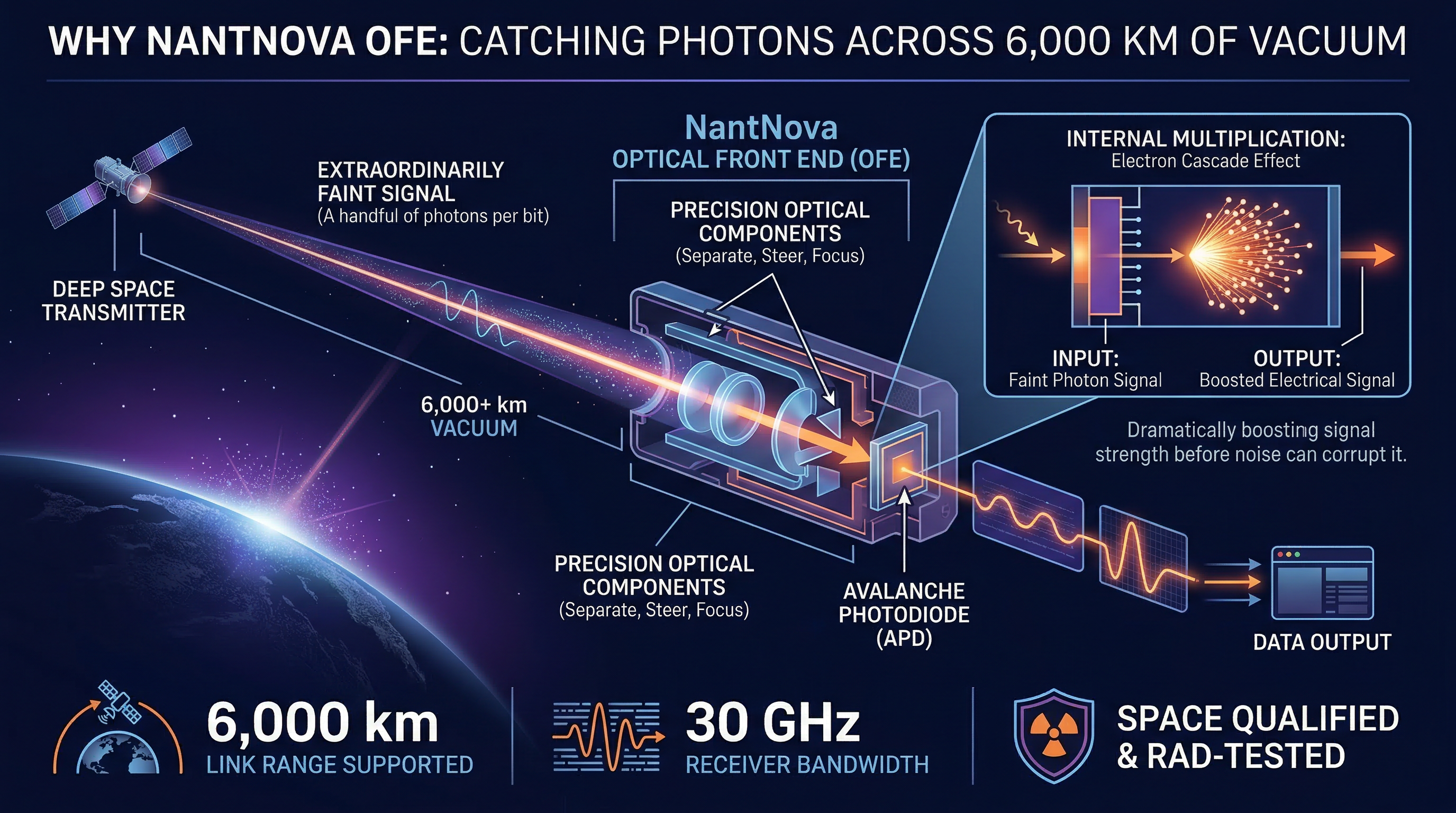
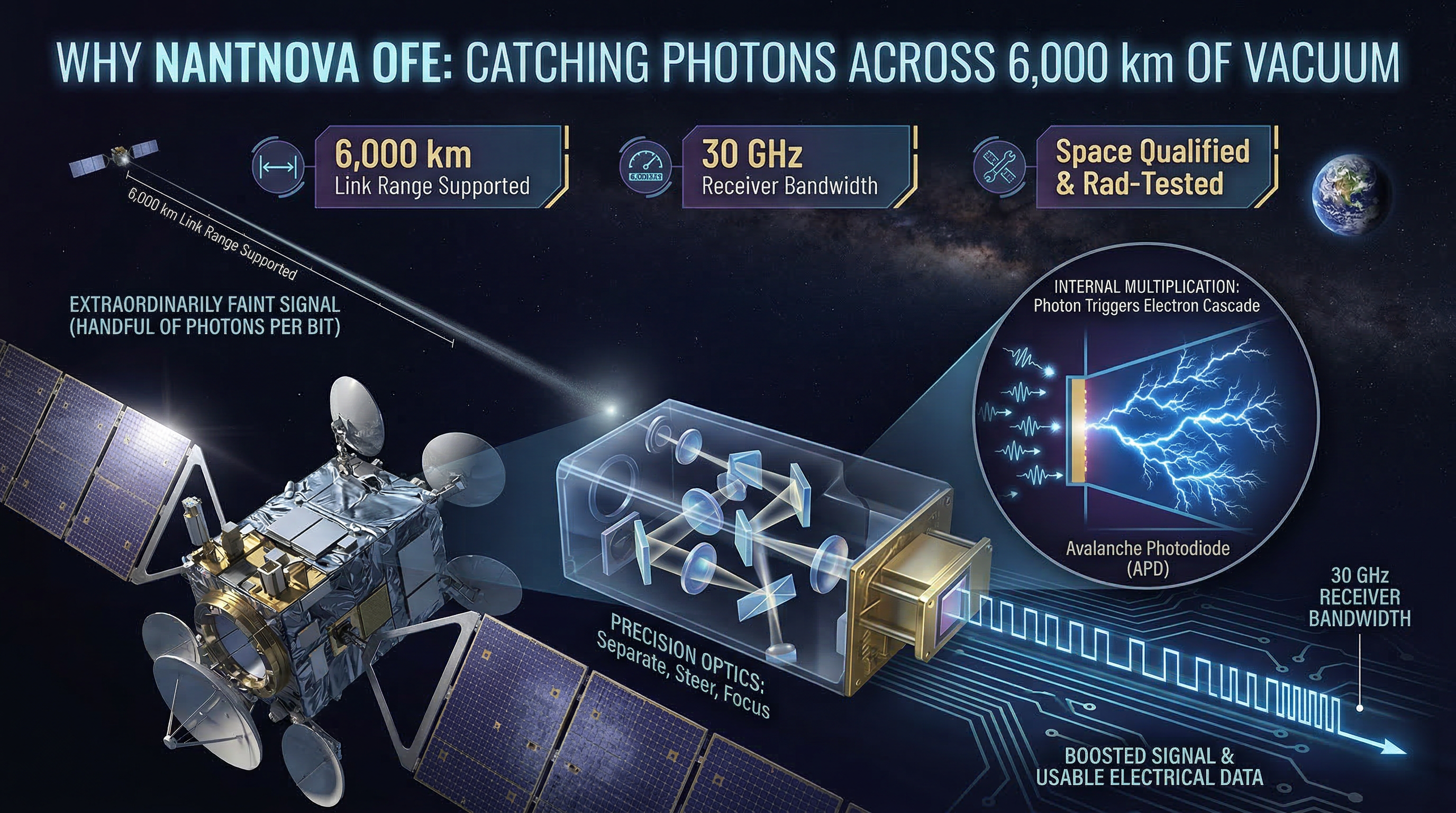
The OFE receives the incoming optical beam through a telescope, then uses a series of precision optical components to separate the transmit and receive wavelengths, split the beam for simultaneous tracking and data recovery, and focus the signal onto high-sensitivity detectors. The avalanche photodiodes (APDs) at the heart of the system multiply each detected photon into thousands of electrons — providing the gain needed to recover data from extremely weak signals without adding excessive noise.
Quad photodetectors (QPDs) run in parallel for real-time beam tracking, keeping the signal locked onto the detector as the terminals move relative to each other. The entire optical chain is designed as a compact breadboard that integrates directly with the telescope assembly.
The OFE optical chain — dichroic filters, beam splitters, QPD tracking sensors, and fiber collimators — integrates onto a compact breadboard that mates directly with the telescope assembly for terminal-level testing.
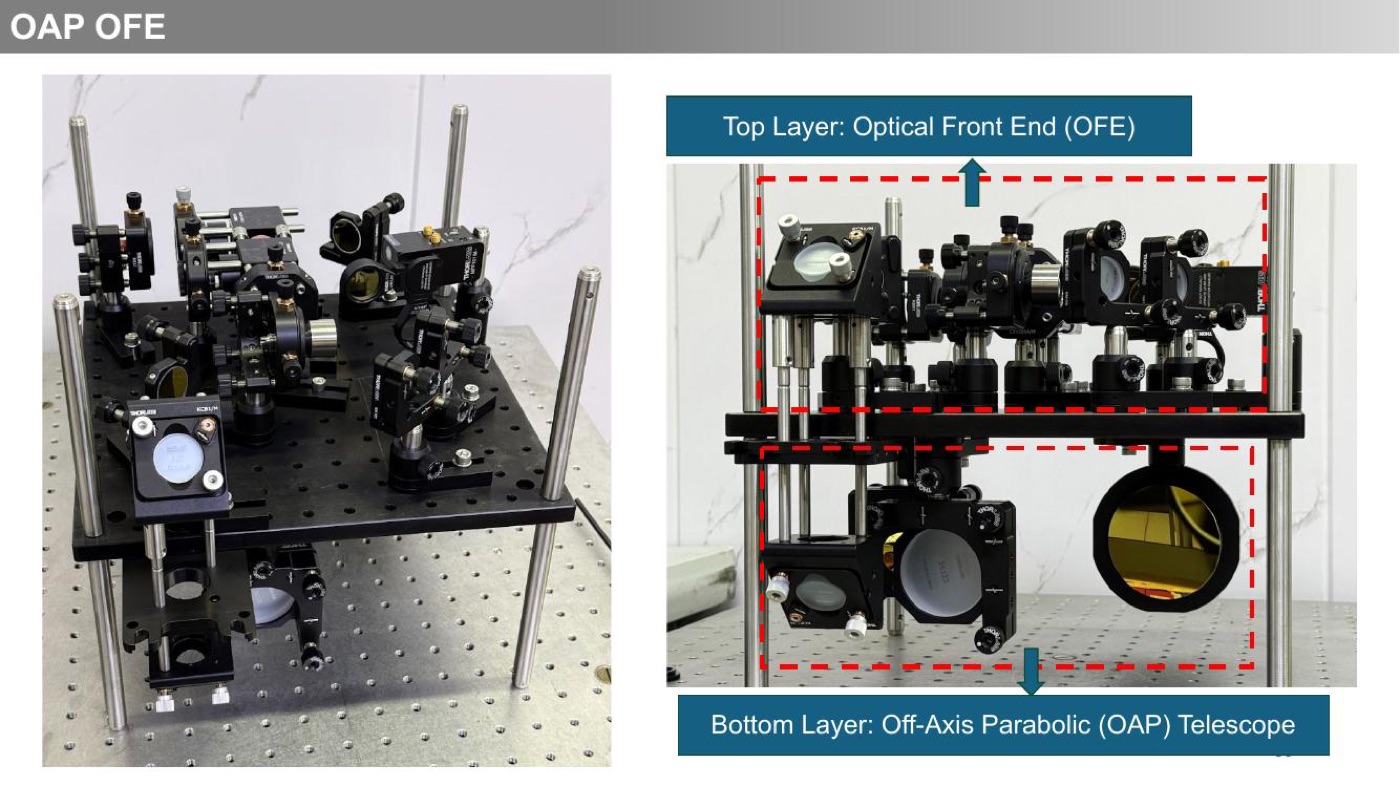
OAP OFE Anatomy — Top: Optical Front End, Bottom: Off-Axis Parabolic Telescope
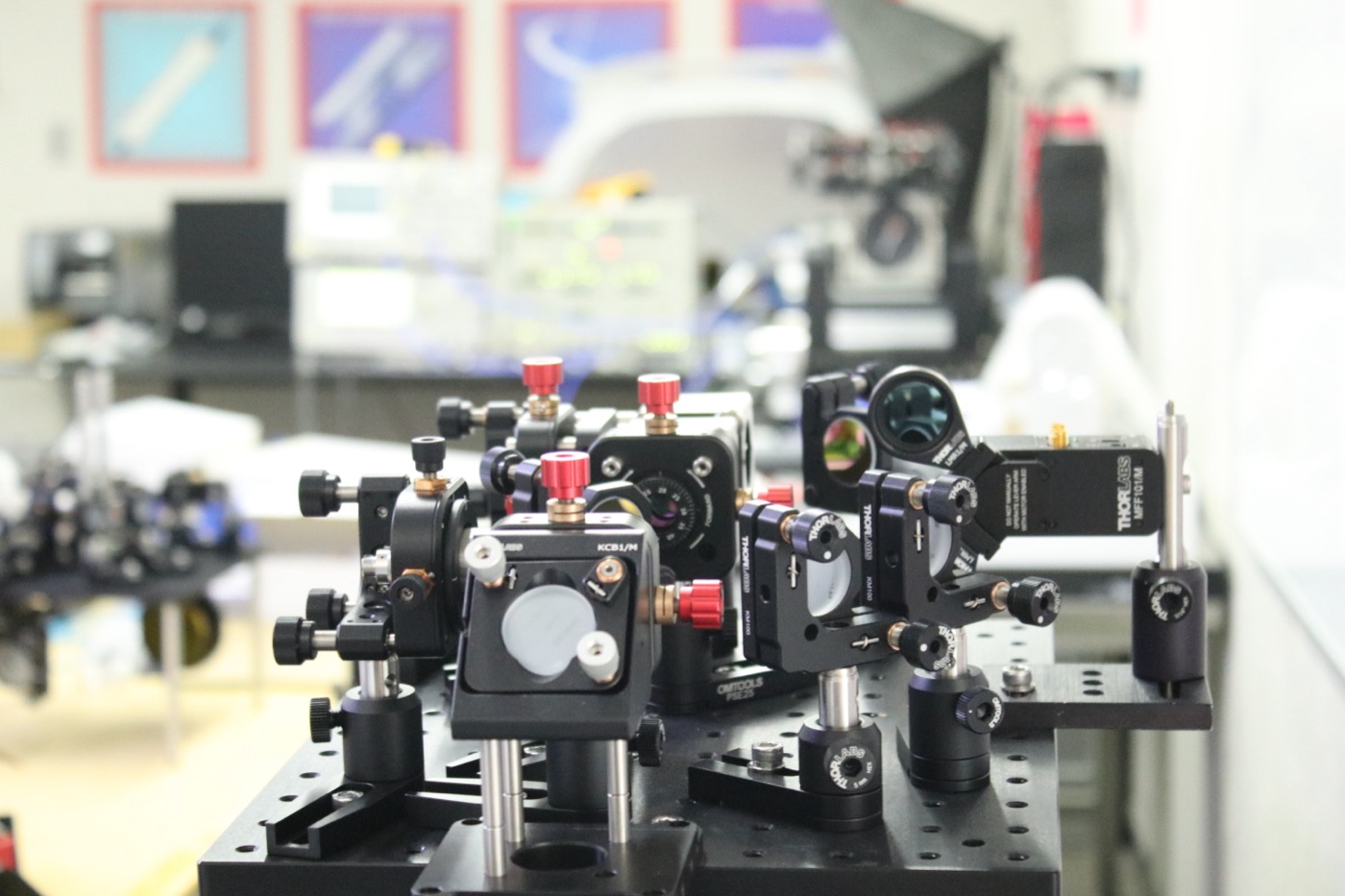
OFE Optical Chain — Dichroic Filters, Beam Splitters & Fiber Collimators
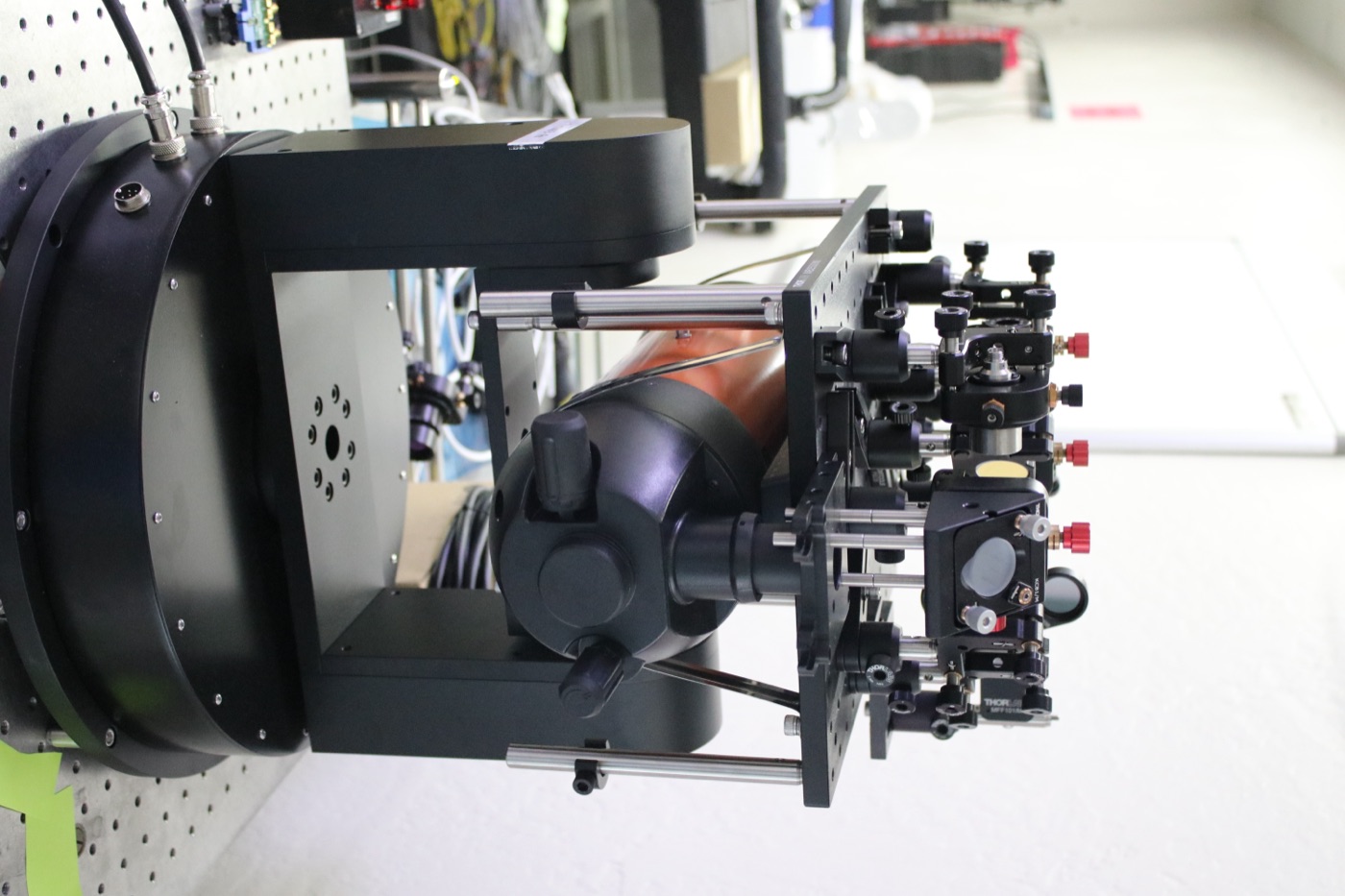
OFE Assembly — Telescope + Optical Breadboard Integration
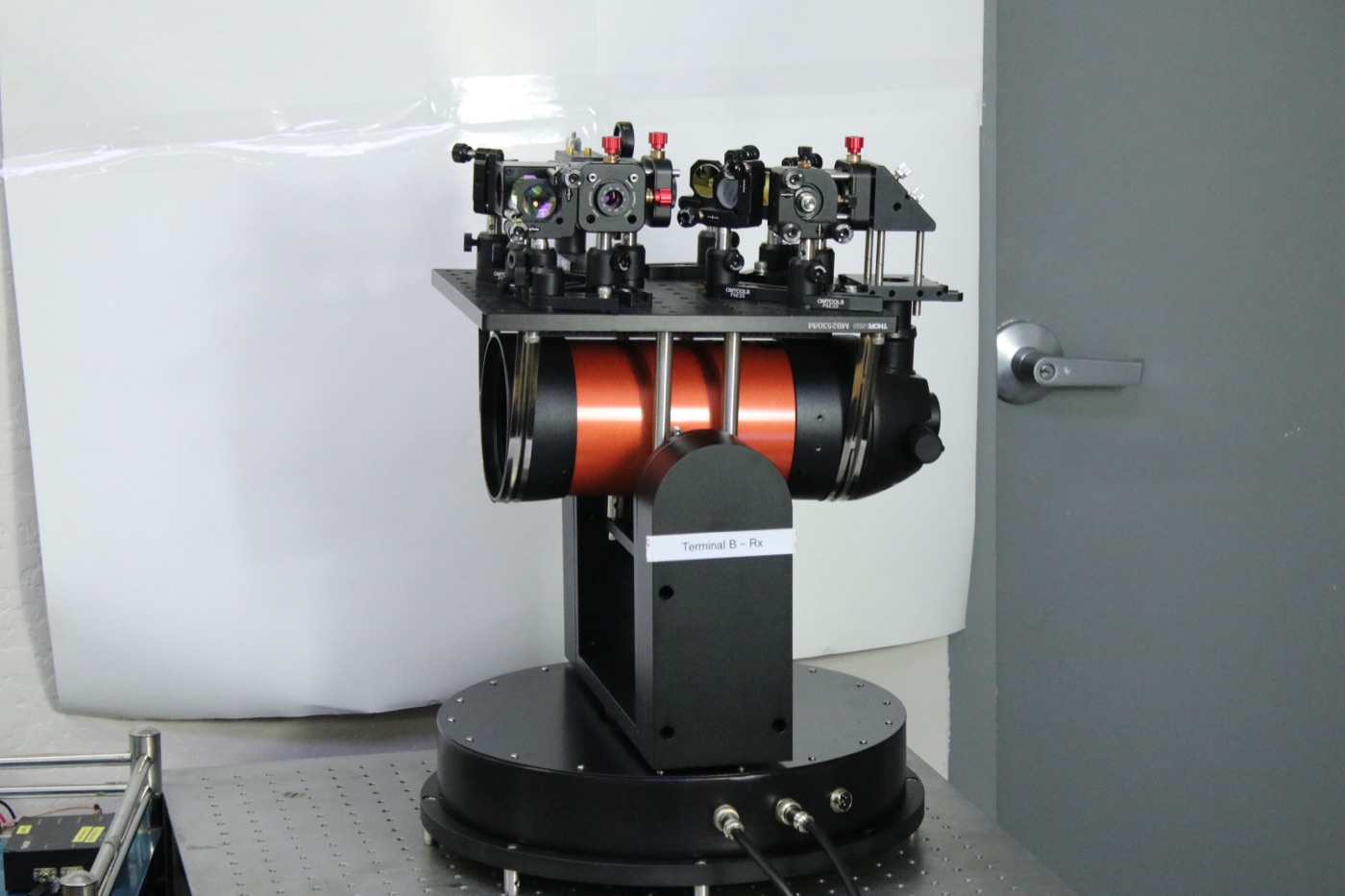
Terminal B — Rx — OFE + Celestron Telescope on Newport Rotation Stage
PR-30-ST — 30 GHz Space-Qualified Photoreceiver
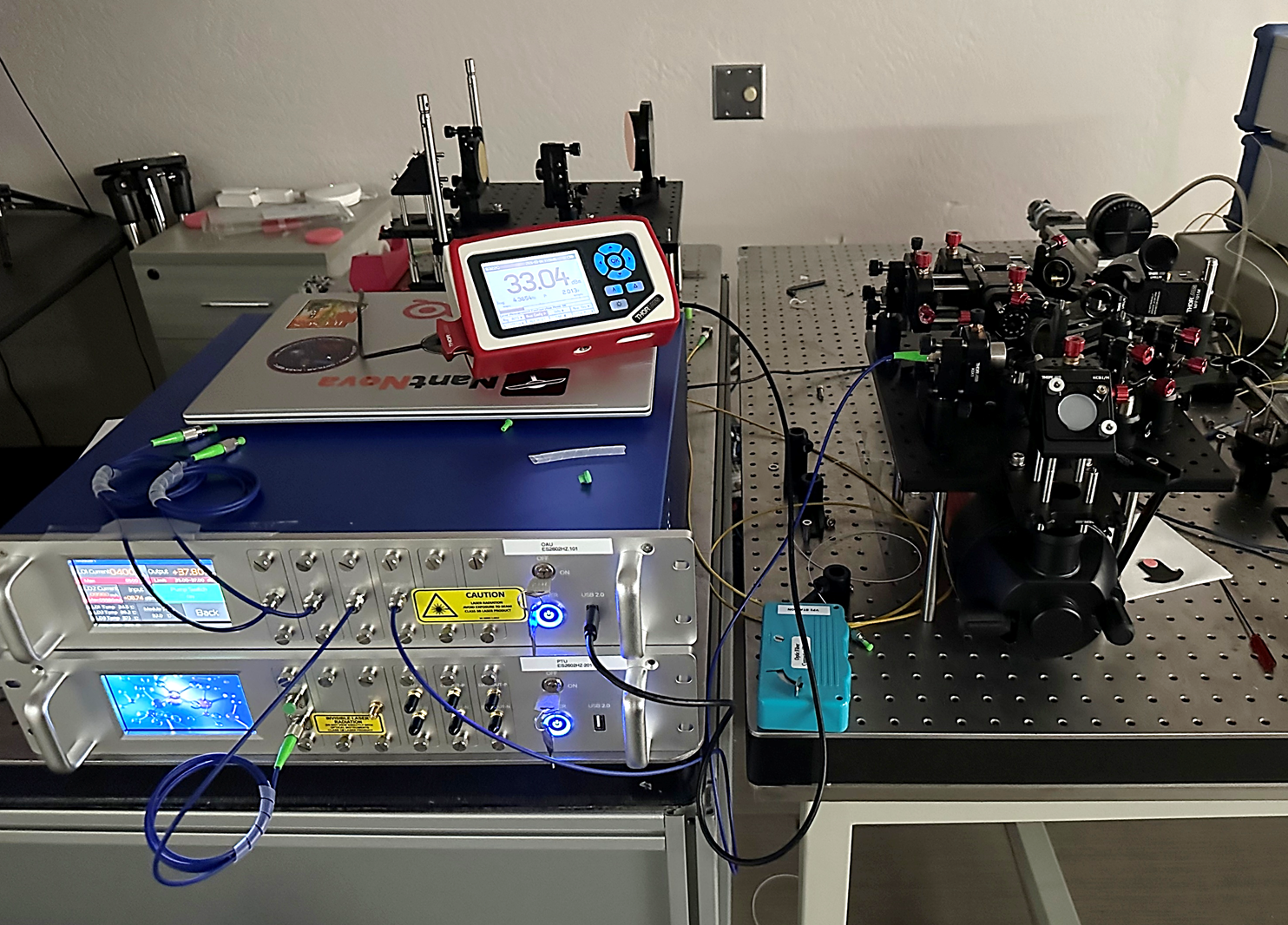
OFE Optical Assembly — Lens Integration
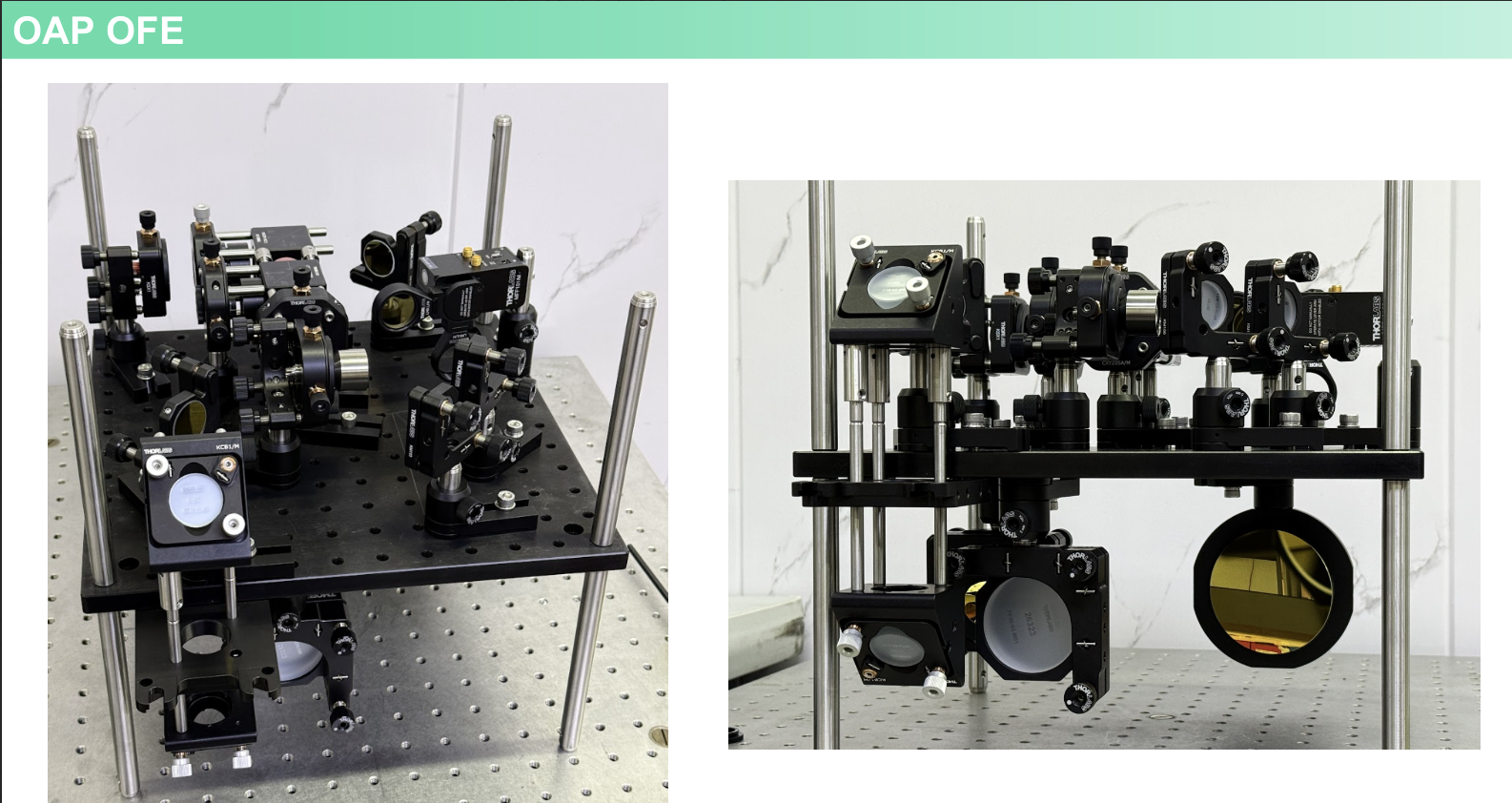
OAP OFE Assembly — Breadboard with Gold OAP Mirror
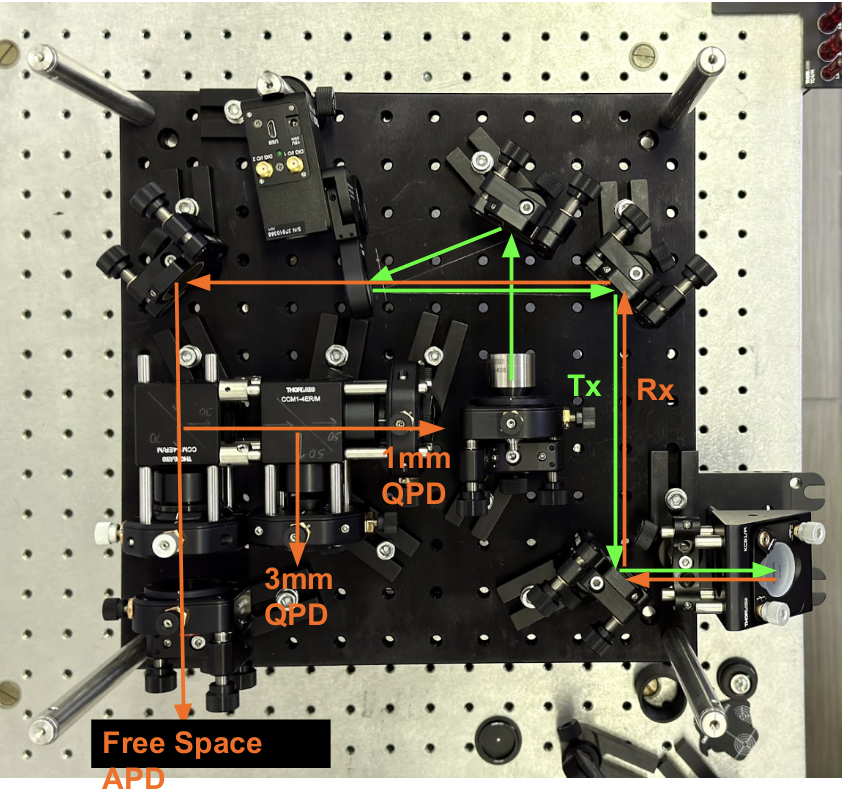
OFE Optical Path — Tx/Rx, QPD Tracking & APD Data
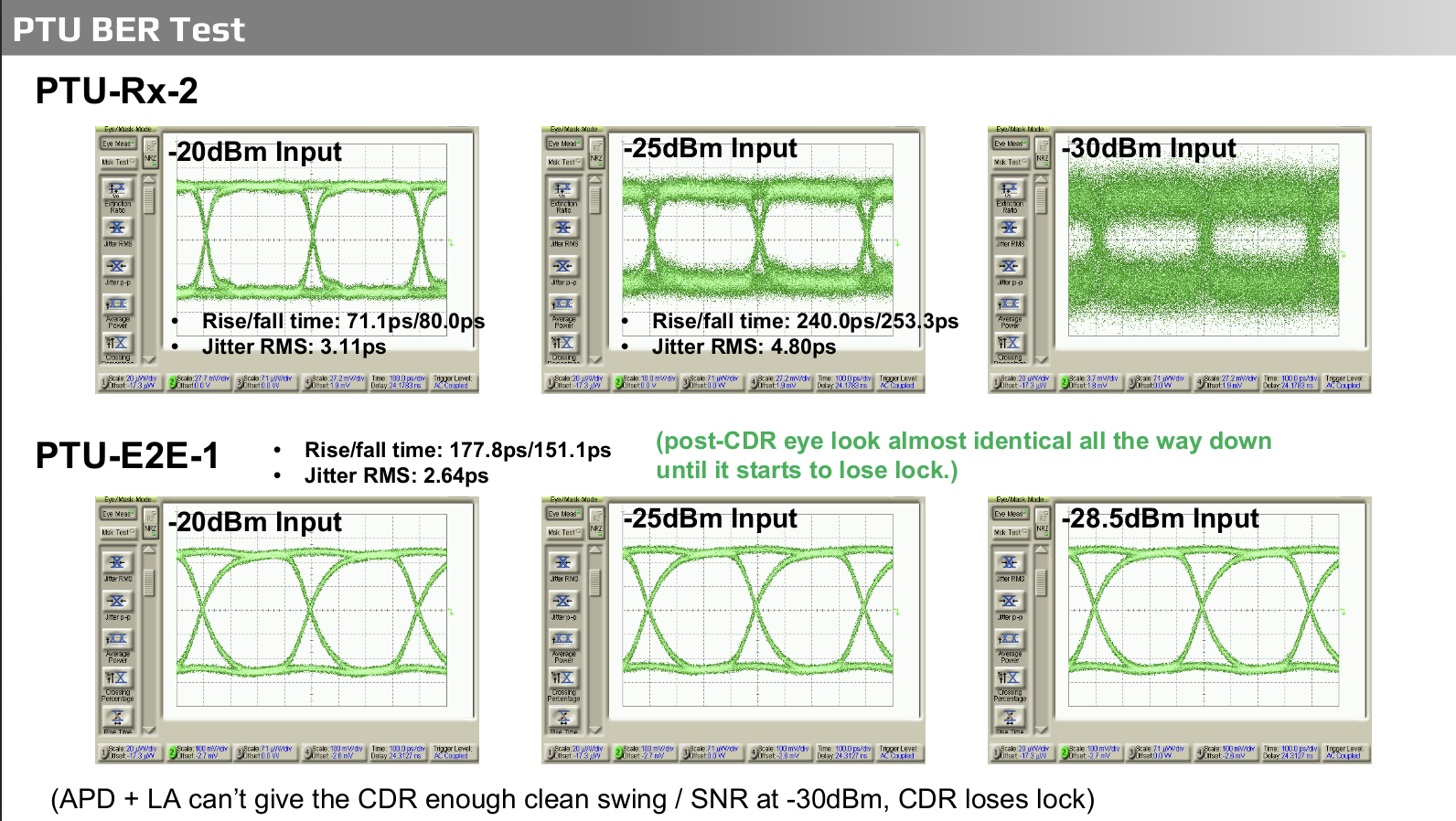
APD Receiver — Eye Diagrams @ −20/−25/−30 dBm
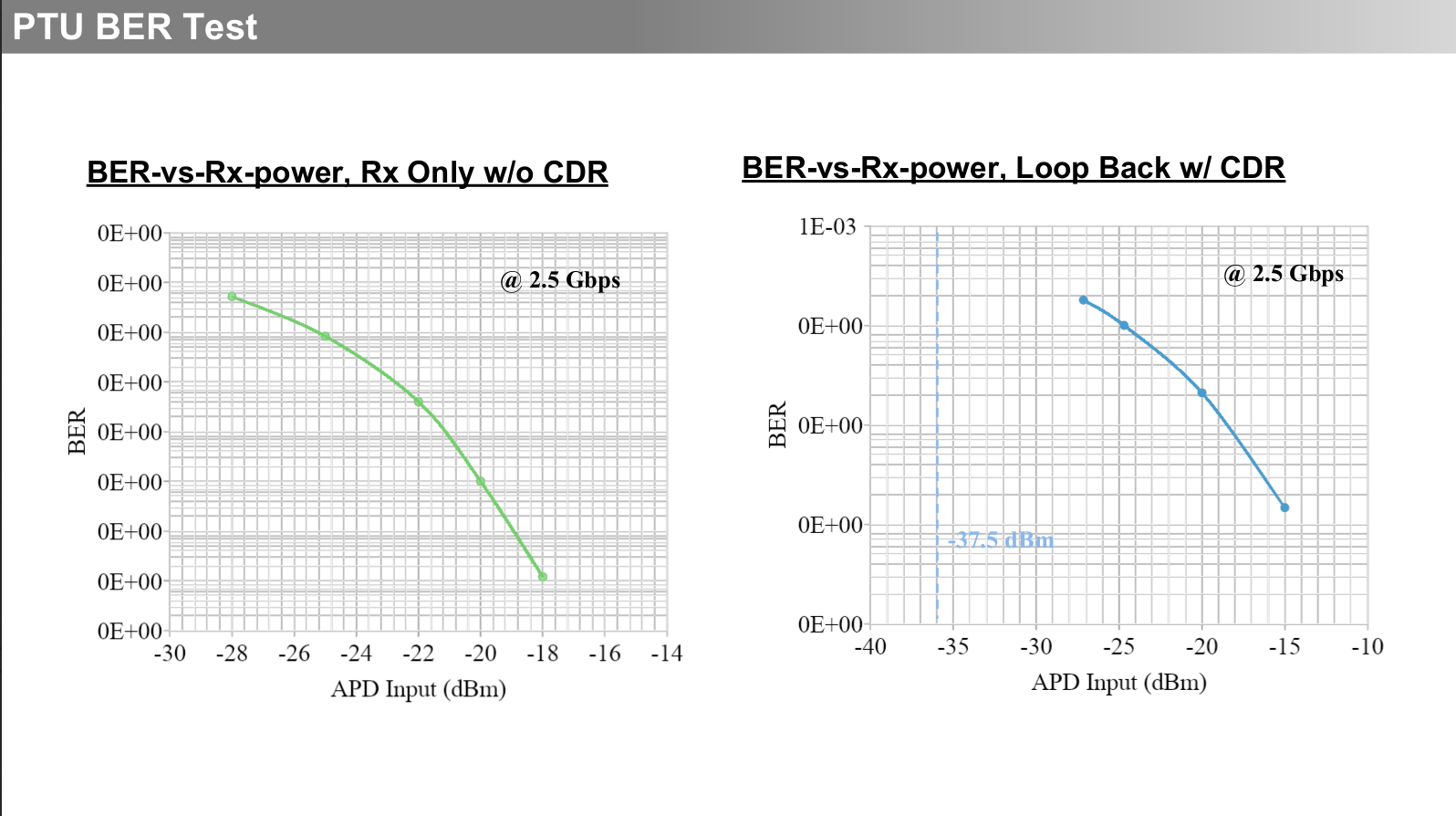
BER vs Rx Power — 2.5 Gbps Performance
LT-DML-3-SP — Direct Modulated Laser
LTA-10-SP — Lightwave Transmitter
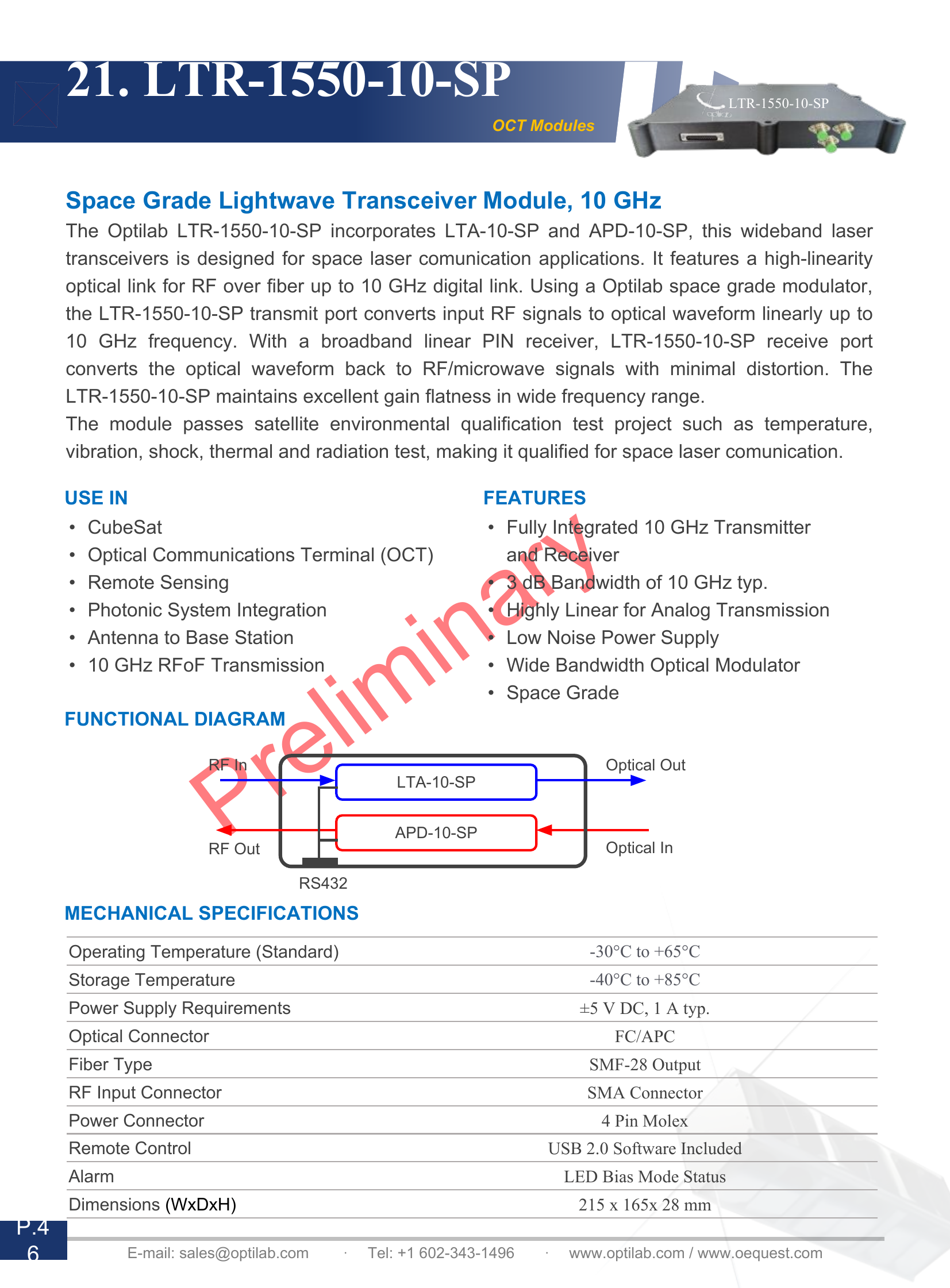
LTR-1550-10-SP — Lightwave Transceiver
NantNova’s Optical Front End achieves 76.5% coupling efficiency with InGaAs APD detectors optimized for the SatLight™ OCT optical path.