
NantNova’s electro-optic modulator platform built on proprietary TFLN and Enhanced TFLN (ETFLN) technology, delivering over 200 GHz electro-optic bandwidth with sub-1.5V drive voltage.
In every optical link — whether between satellites or across a data center — the modulator is the component that converts electrical data into light. Today’s modulators are slow, so they need power-hungry digital signal processors (DSPs) to compensate. The PTU changes that equation completely.
NantNova’s PTU is built on Thin-Film Lithium Niobate (TFLN) — a breakthrough material where lithium niobate crystal is precision-sliced to a film thinner than a human hair (~200 nm). At this scale, the material’s natural electro-optic properties become extraordinarily efficient: light can be modulated at over 200 GHz bandwidth using less than 1.5 volts, the same voltage level as standard CMOS chips. No DSP required. The result is 20× lower energy per bit than conventional approaches — a transformative advantage for space systems with fixed power budgets and data centers racing to cut optical interconnect costs.
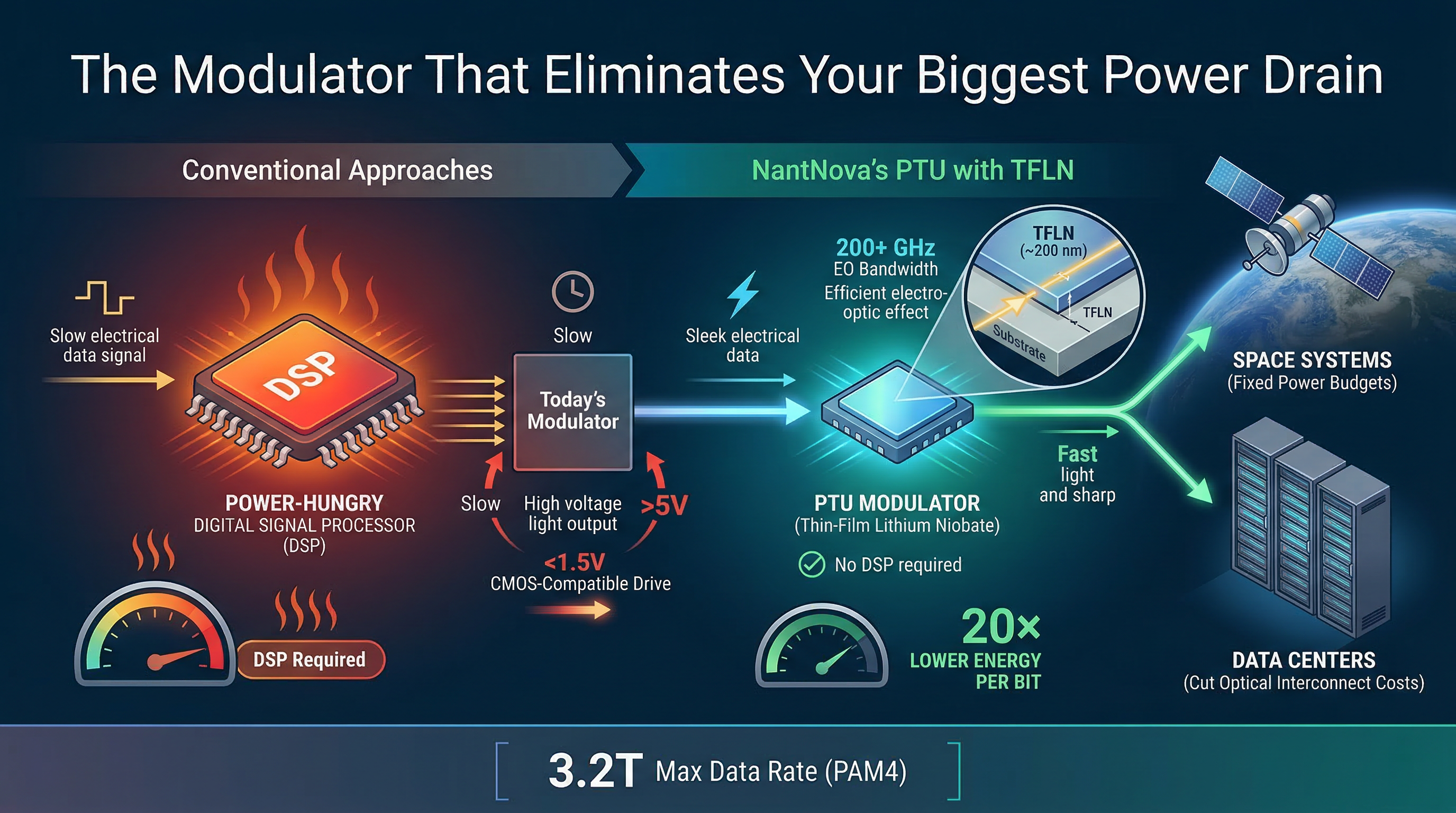
The PTU uses a Mach-Zehnder interferometer design — light is split into two paths, one path’s phase is shifted by the TFLN modulator, and the paths recombine to encode data as light pulses. Because TFLN responds to voltage changes at terahertz speeds, the modulator keeps pace with the fastest data rates without the latency, heat, or complexity of DSP electronics. The platform supports PAM4 modulation from 800G to 3.2T per channel and is fabricated in standard CMOS fabs, meaning it scales to volume production.
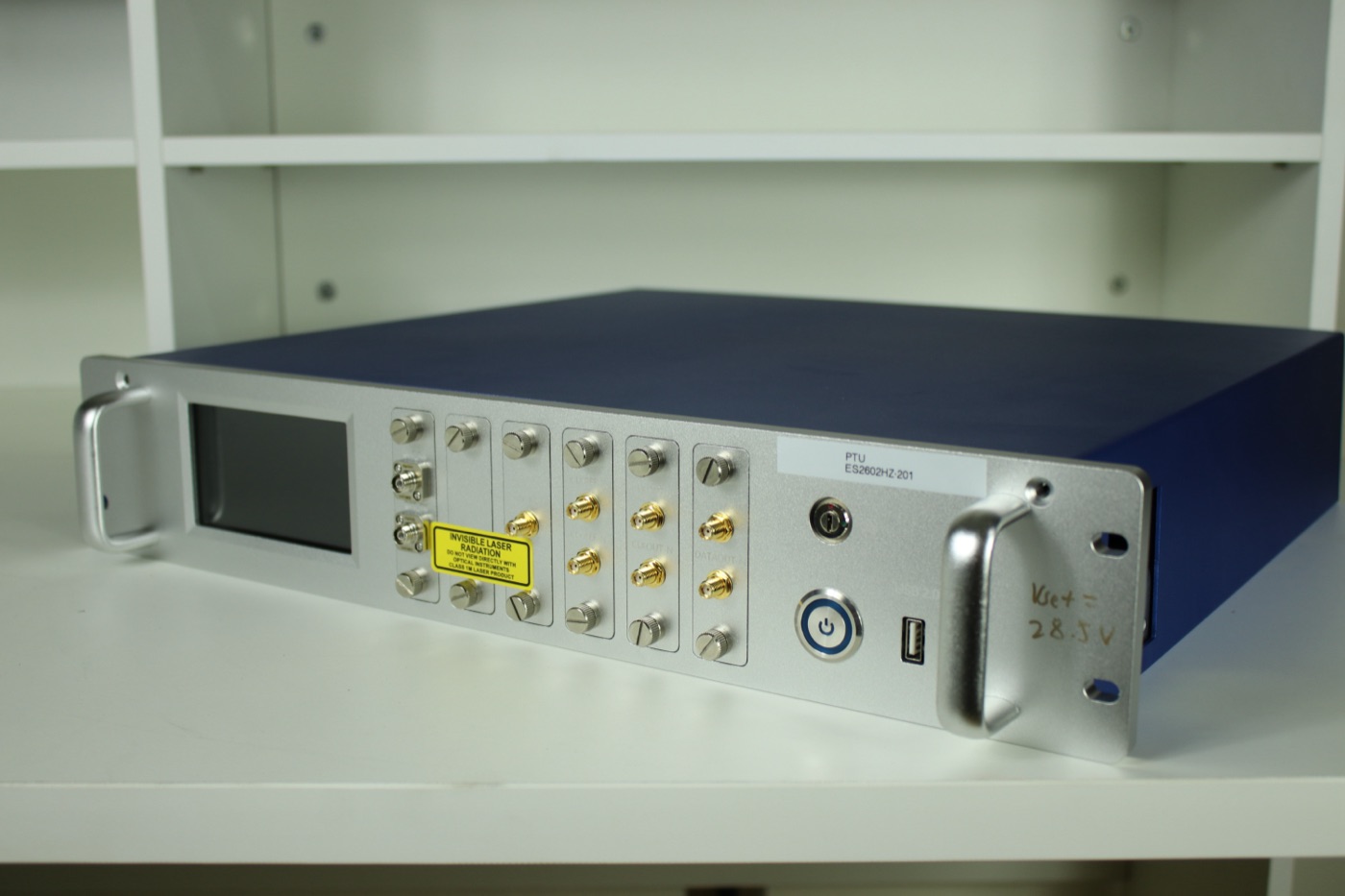
PTU ES2602HZ-201 — Rack-Mount Photonics Transport Unit
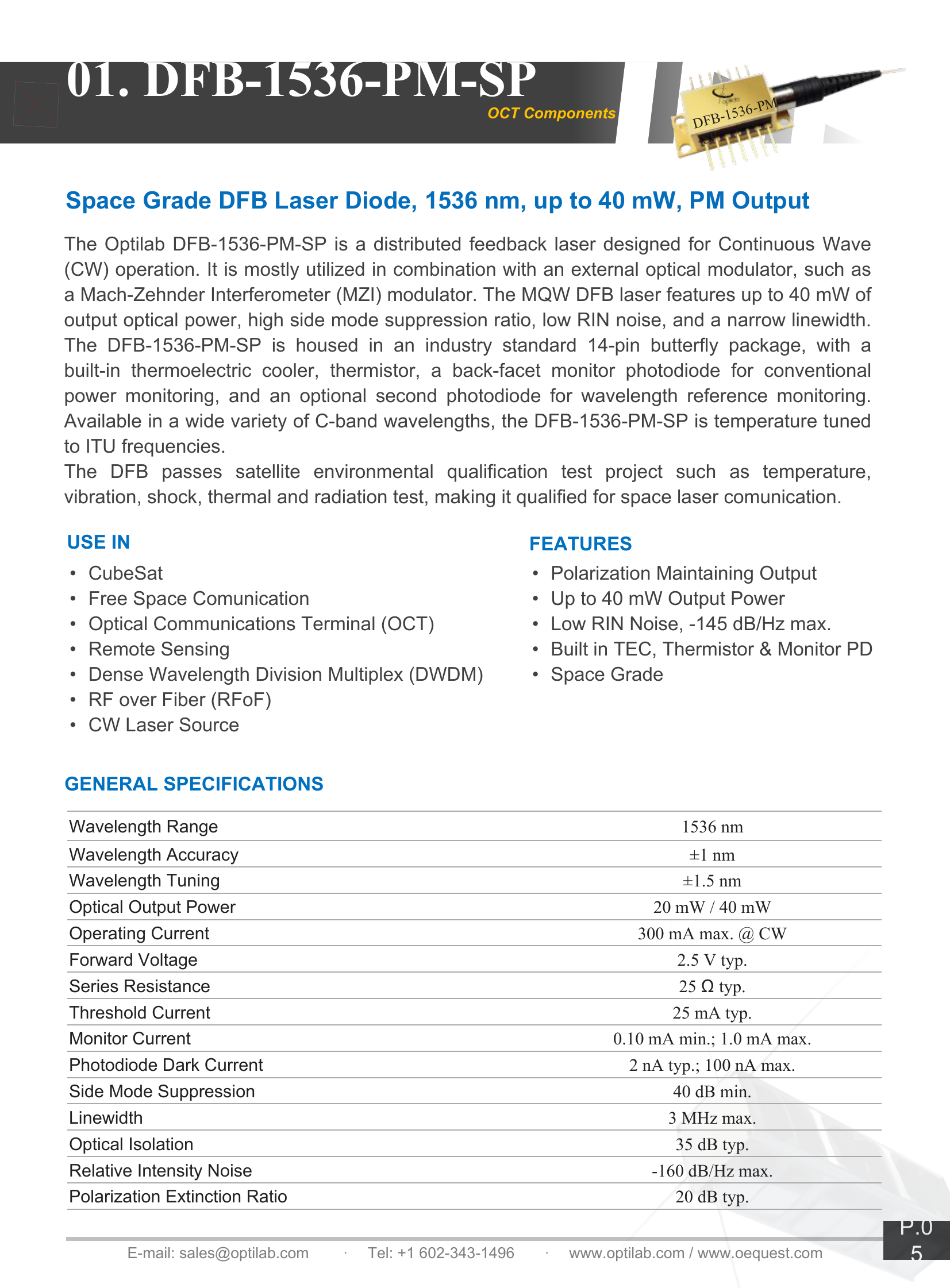
DFB-1536-PM-SP — 1536 nm DFB Laser Source
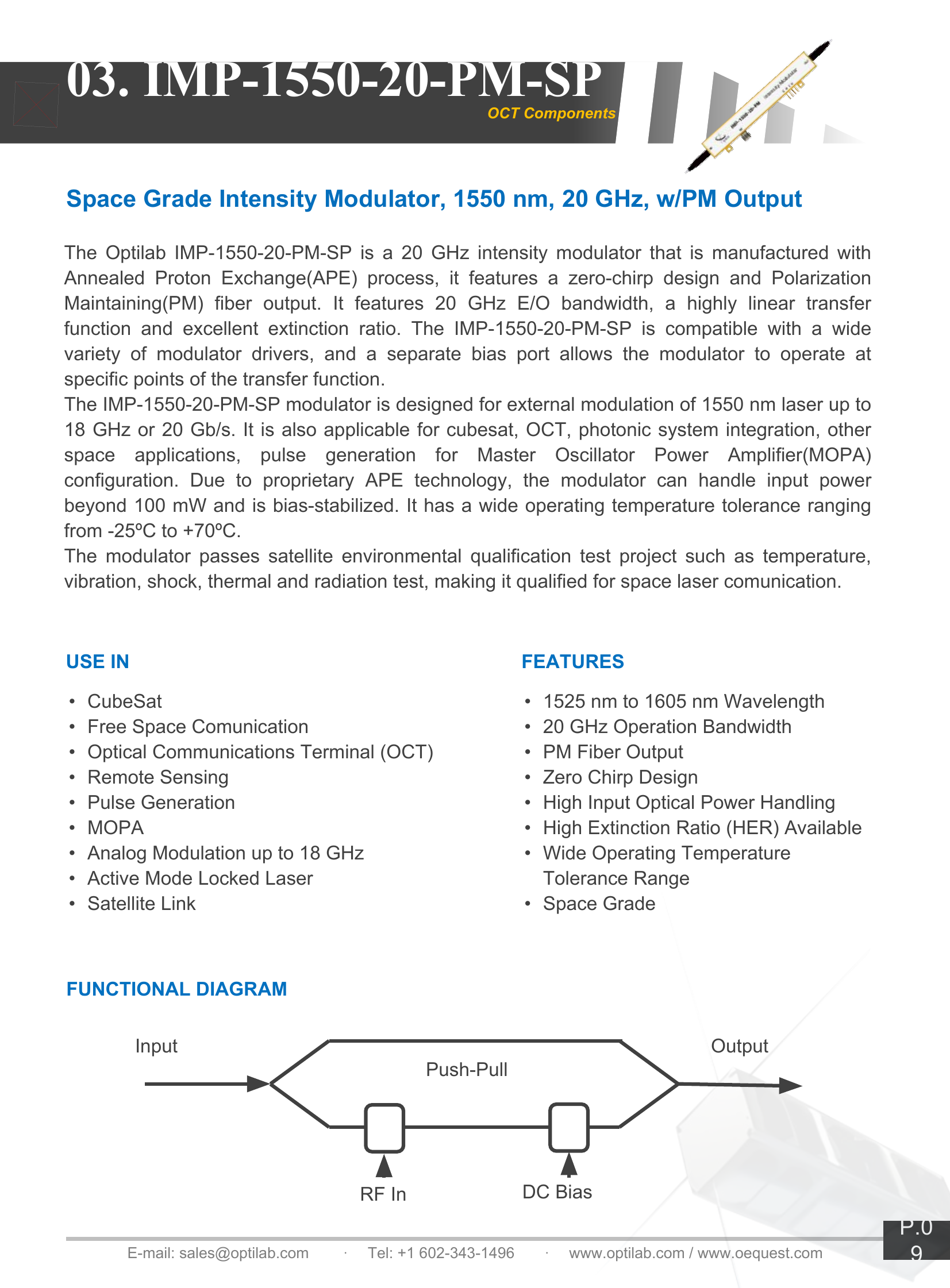
IMP-1550-20-PM-SP — TFLN Intensity Modulator
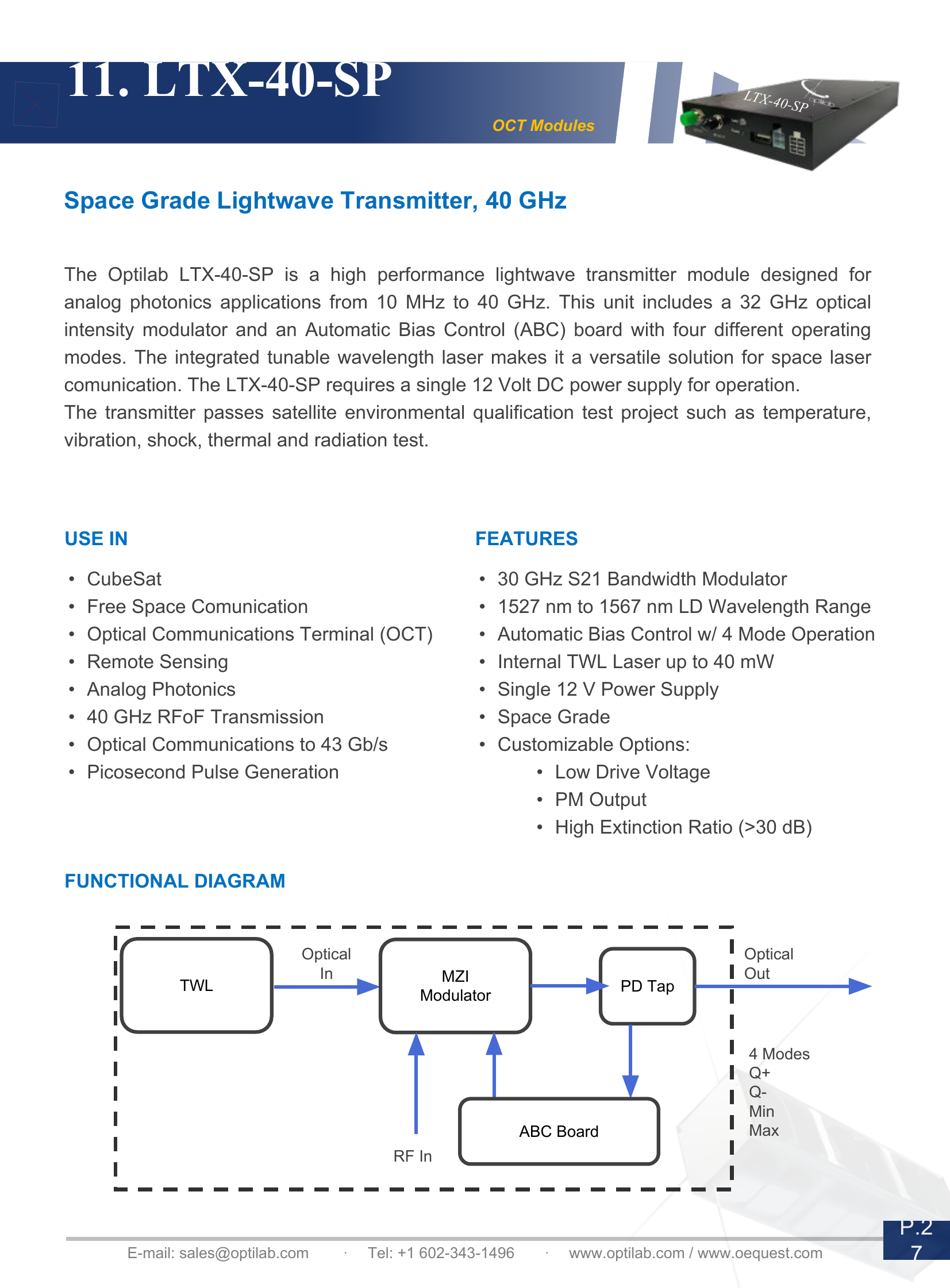
LTX-40-SP — 40 GHz Lightwave Transmitter
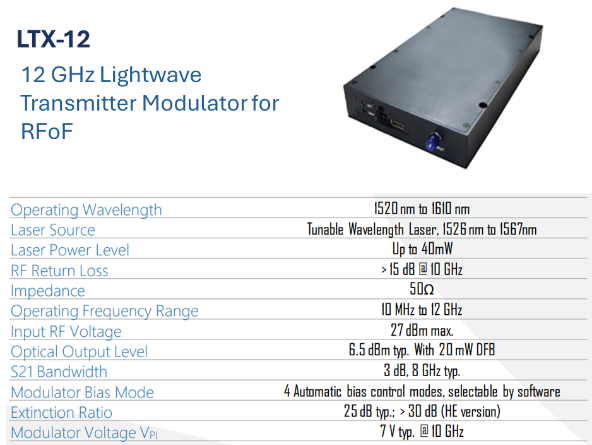
LTX-12 — 12 GHz Transmitter for RFoF Applications
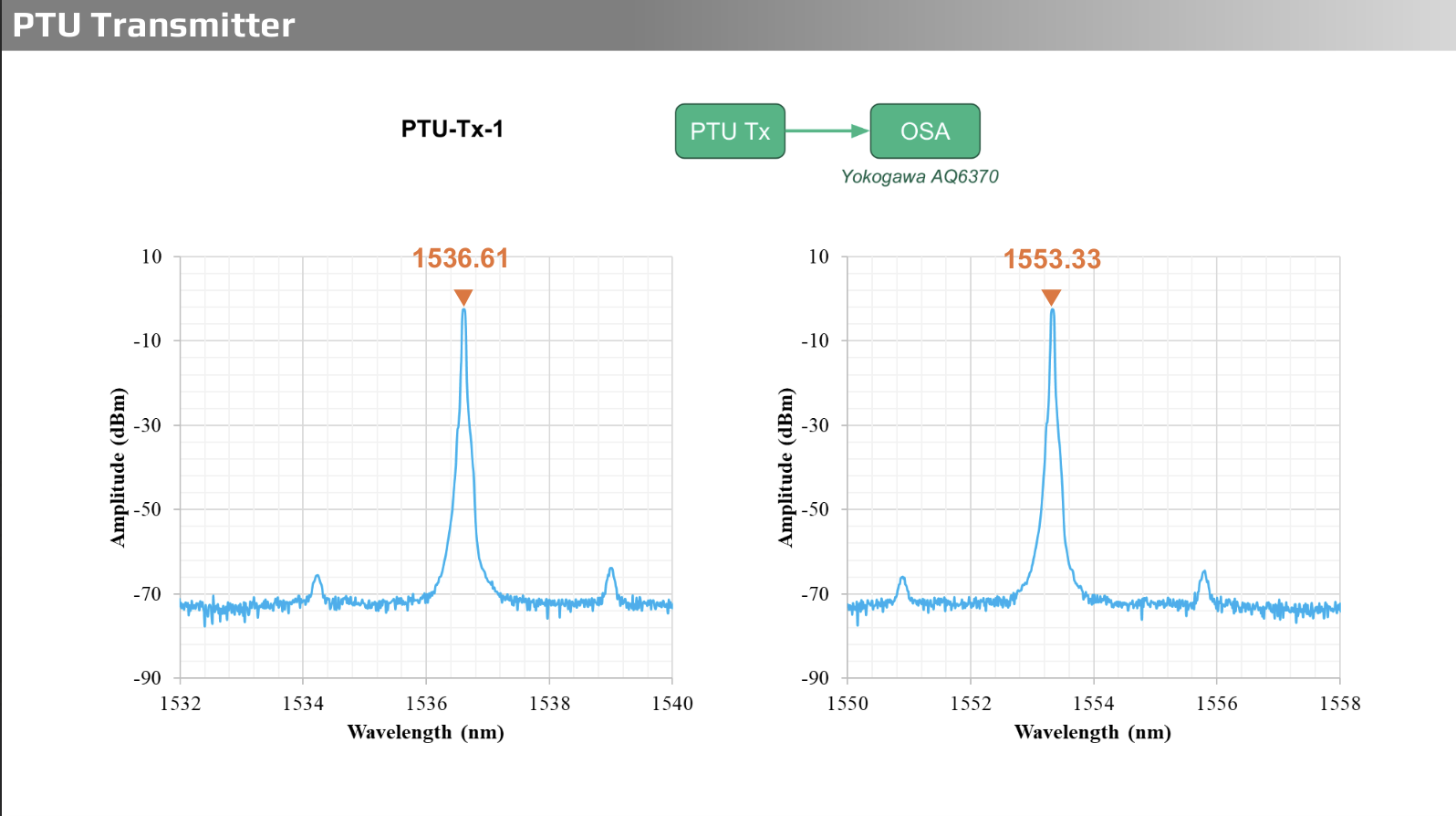
PTU Optical Spectra — Dual Wavelength @ 1536 & 1553 nm
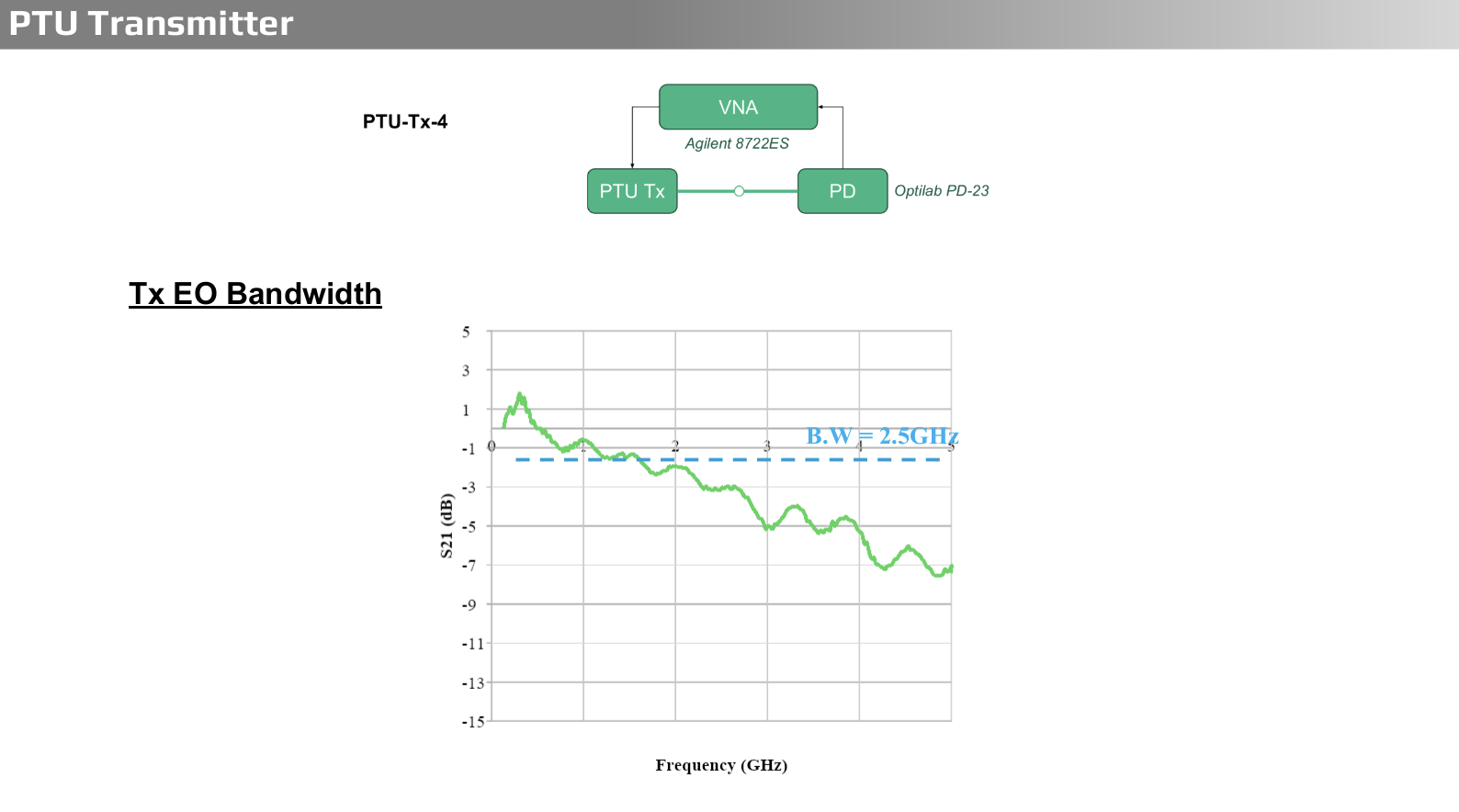
PTU Tx — Electro-Optic Bandwidth Characterization
From TFLN modulators to 3.2T data rates, NantNova’s Photonics Transport Unit delivers DSP-less performance with CMOS-compatible drive voltages.